

Who is Andy Burnham?
The political media machine is in agreement: the King of the North is the UK's prime-minister-in-waiting, but who is the man that many Labour MPs seem to see as their saviour?

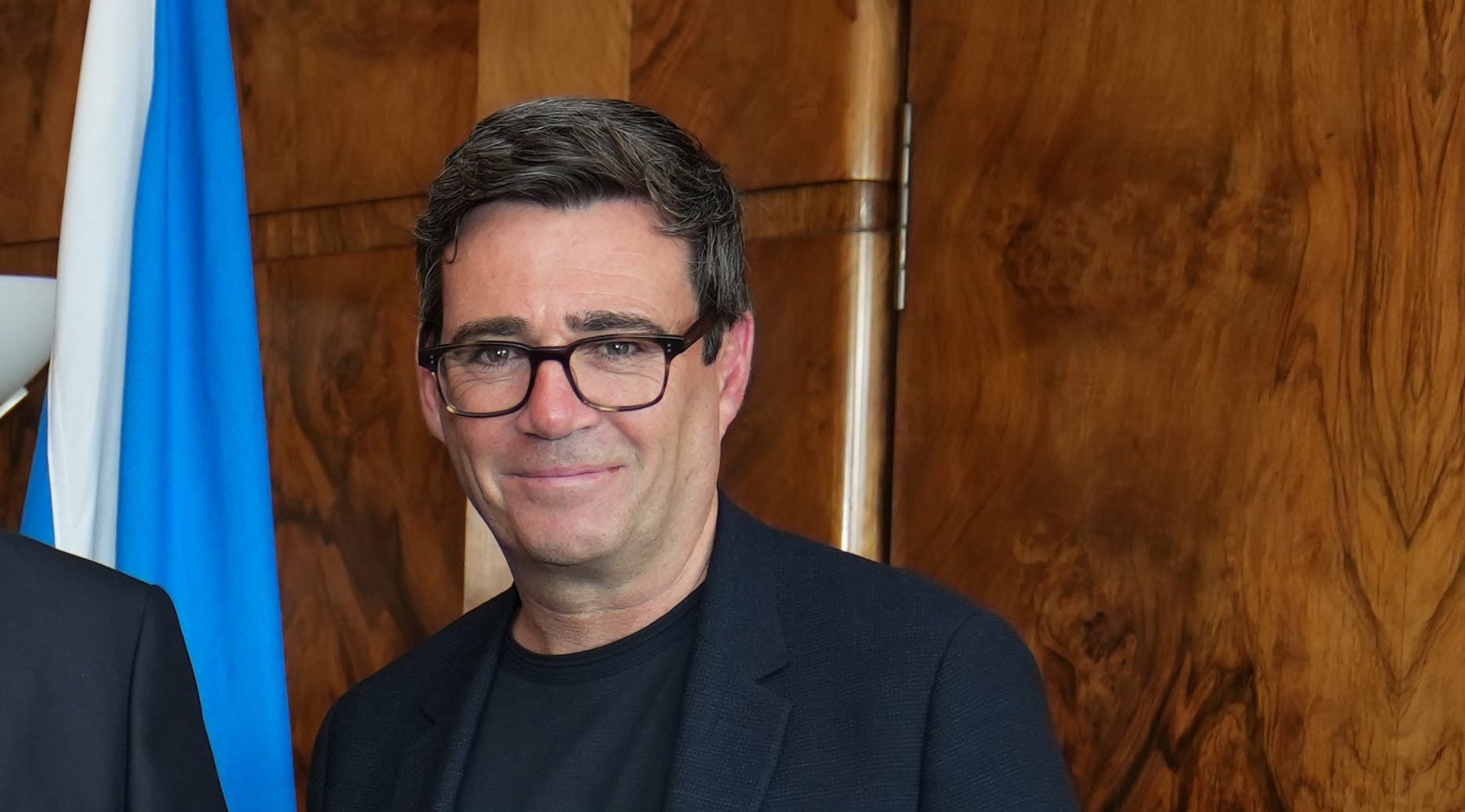
Born Andrew Murray Burnham to a telephone engineer and a receptionist in the Liverpool suburb of Aintree, the current Mayor of Greater Manchester has had a storied history as a Labour politician.
After first joining the party at the age of 15, he became a researcher for Tessa Jowell, MP for Dulwich and West Norwood at the time, in 1994 at the age of 24. Before joining parliament as the MP for Leigh in 2001 for Blair’s second term, he served as a parliamentary officer in the NHS Confederation, administrator in the Football Task Force, then later special adviser to Chris Smith, the Secretary of State for Culture, Media and Sport.
In 2005, Burnham became Parliamentary Under-Secretary of State for Home Affairs, and thus responsible for the implementation of the Identity Cards Act 2006. This is a particularly interesting fact, given the backdrop of the modern-day government’s controversial attempt to pass legislation on digital ID, as the 2006 act also prompted concerns about civil liberties.
The Liverpudlian went on to occupy a variety of posts in the Blair and Brown governments before settling into the position of Secretary of State for Culture, Media and Sport in 2008. Here we see what is perhaps the most defining moment for Burnham’s reputation as a man of the people, when in April 2009 he was heckled at the 20th anniversary of the Hillsborough disaster. As soon as the next day, he raised the issue in cabinet, then in parliament, and the second Hillsborough inquiry soon follow. Five years later, at the 25th anniversary of the event, what were once heckles had become cheers of approval.
ℹ️ Factoid #1: As a supporter of Everton FC, future prime minister Andy Burnham doesn’t risk leaving Gen Z fans wincing as he declares himself a “gooner” like Arsenal fan Keir Starmer…
In June 2009, Burnham became Health Secretary under Gordon Brown. His eleven months in office were marked by the government’s response to the swine flu pandemic, the launch of an independent inquiry into the high mortality rates at Stafford Hospital, and his signature initiative of a National Care Service, which offered publicly funded social care free at the point of use.
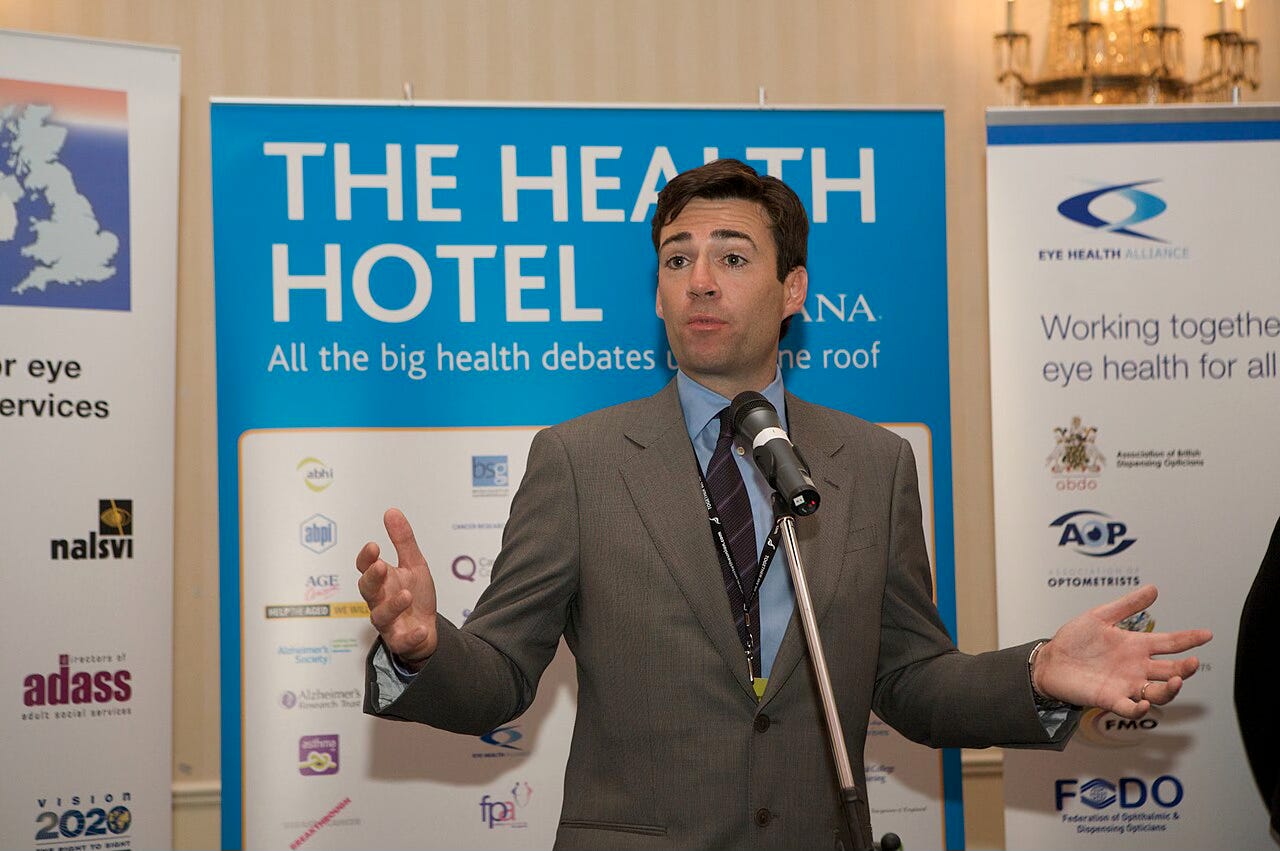
Despite his current perception as candidate worthy of a coronation, Andy Burnham has not had much luck in becoming leader of the Labour Party in the past. In 2010, he came in fourth, just ahead of Diane Abbott and behind the winner Ed Miliband, the winner’s brother David Miliband, and winner of the 2017 TV BAFTAs’ Must-See Moment Award, Ed Balls, of Strictly Come Dancing x Gangnam Style fame. On his second attempt, he performed slightly better, more than doubling his vote share from 8% to 19%, but still managing to lose out to a Jeremy Corbyn at the height of his powers.
In the wake of this second rejection from the Labour Party electorate, Burnham gave up on Westminster politics and returned to his native North, becoming Mayor of Greater Manchester in 2017 with a whopping 63.4% of the vote in a ranked voting system similar to that which will decide the next leader of the modern-day Labour Party. As mayor, his best known achievement is arguably his ‘Bee Network’, an integrated transport network of bus, trams, and cycling and walking routes akin to Transport for London’s own system.
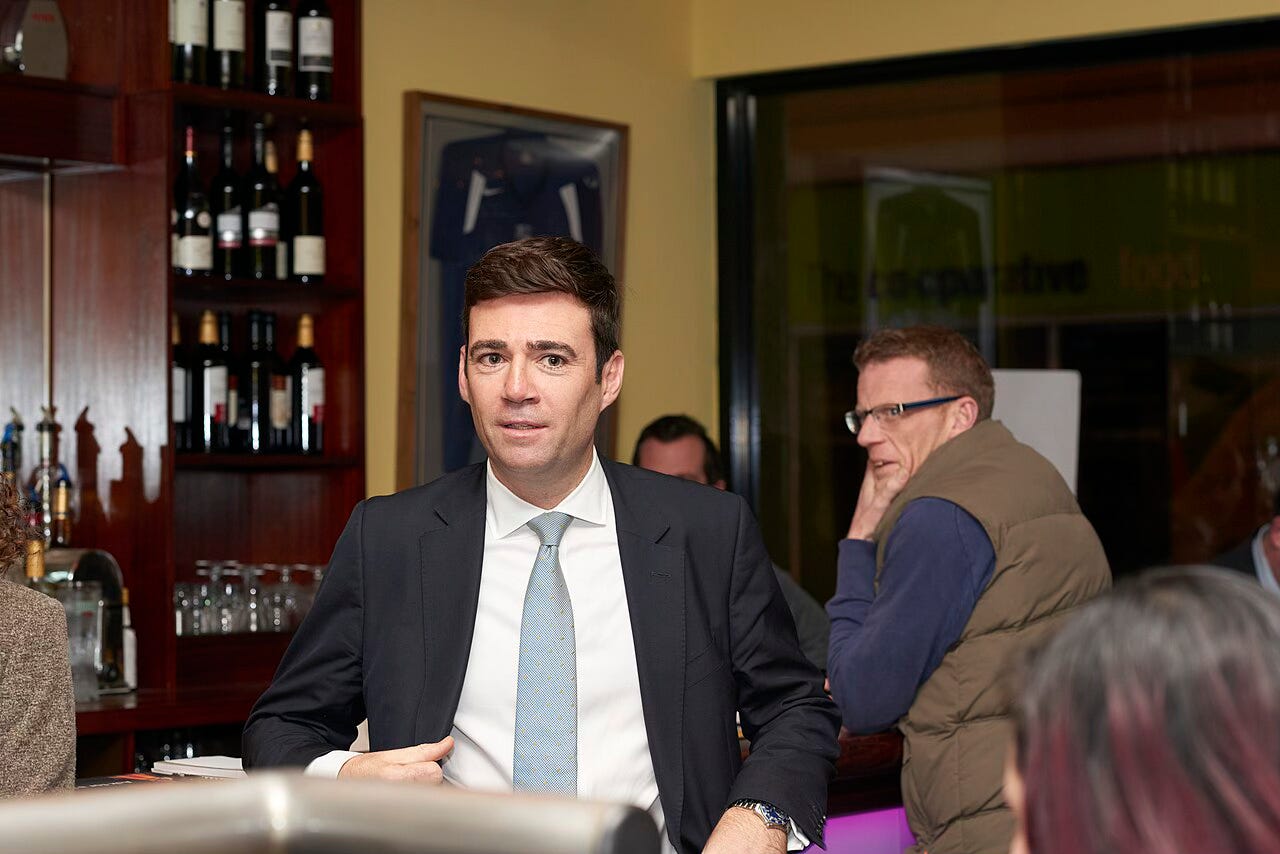
It was in 2020 that Burnham earned his ‘King of the North’ moniker when he rallied against Boris Johnson and his government’s decision to place Manchester into tier three of its staggered (and, arguably, staggering) lockdown system, requesting 65 million pounds of aid for local businesses who would need to close under such a system.
ℹ️ Factoid #2: If he were to become prime minister, he would be the second Roman Catholic to hold the post, if one counts Boris Johnson. Whether this matters much these days is another matter. At the time of his last leadership bid in 2015, Burnham was reported to have become “disillusioned with his faith” in the face of the Catholic Church’s less progressive stances.
Burnham is often touted as the perfect candidate to unite the factions of the Labour Party, and the Northern mayor’s ability to represent both sides of various divides goes all the way back to his education. From humble Merseyside beginnings, he managed to make the jump from a “very mixed and middling” Catholic comprehensive (his own words), to the typically elite Cambridge, being one of only 11 from his school of 200 to go to university.
Unfortunately for the Labour Party, his ability to unite was not enough to convince the party’s National Executive Committee (NEC) to allow him to run in the Gorton and Denton by-election, opening the way for the Green Party’s candidate Hannah Spencer landslide win.
If there’s one thing to know right now about Andy Burnham, it’s that Sir Keir Starmer seems to be quite scared of him, and recent events suggest that he is quite right to fear him.
Wes Streeting resigns but stops short of a leadership bid

A few days ago, I predicted that Wes Streeting could become prime minister if, and only if, he could “borrow Catherine West’s balls within the next week”. Said balls have now been well and truly borrowed as the (now former) Health Secretary has tendered his resignation in a two page, well-written but badly proofread letter.